

Ukraine energy storage prospects
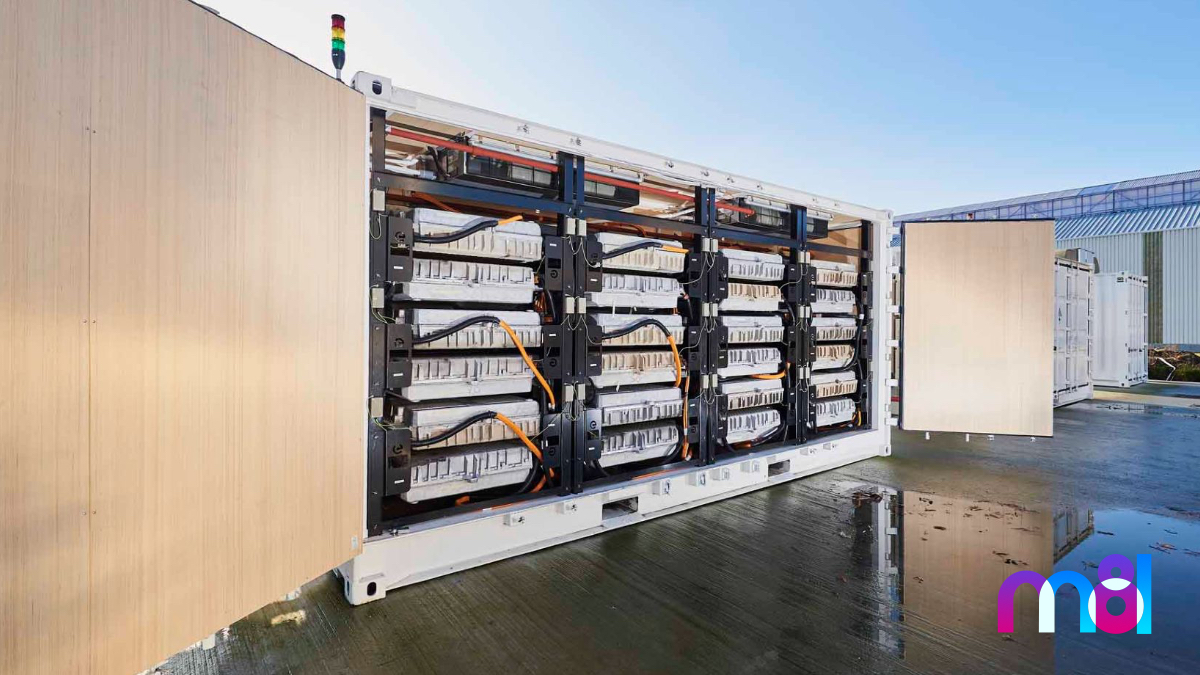
On 16 November 2021, the Parliament of Ukraine adopted the Bill “On Amendments to Certain Laws of Ukraine on the Development of Energy Storage Systems” №5436-d of 17 September 2021 in the first reading.
The Bill amends the Law of Ukraine “On the Electricity Market” and the Law of Ukraine “On the National Energy and Utilities Regulatory Commission” in part related to ensuring the operation of energy storage systems and storage activities.
The Bill’s provisions will help to optimize the load on the electrical grid, avoid restrictions on electricity generation and ensure easier integration of “green” generation facilities into the power system of Ukraine.
Energy storage system operator
The Bill proposes the concept of “energy storage system operator”, which is an entity engaged in energy storage activities for the purpose of selling electricity from the energy storage system, and / or for the purpose of providing ancillary services or providing balancing services through energy storage systems. The dispatch control of energy storage systems will be conducted by the transmission system operator (TSO, which is NPC “Ukrenergo”).
Options to interconnect to power grid
The Bill provides that when developing the transmission system development plan, the TSO preliminary determines the interconnection points of energy storage systems considering the existing system constraints and optimization of electricity losses, although it does not restrict the right to interconnect at any other points. The interconnection to the power grid is to be conducted in accordance with the procedures described in the Transmission System Code and the Distribution Systems Code.
Conducting energy storage activities
In order to carry out storage activities, the applicants must obtain an appropriate license from the National Energy and Utilities Regulatory Commission (NEURC). NEURC has not yet approved the licensing conditions. The Bill foresees that an electricity producer has the right to use the energy storage system without obtaining such storage license, if the capacity of electricity supply does not exceed the installed capacity of electrical installations of such a producer at any time. The same rule applies to electricity producers who have a “green” tariff or who have acquired the right to be supported (RES producers) as a result of the auction, and this is not a basis for revising the established “green” tariff or auction price.
The Bill provides regulatory restrictions for the RES producers, which have energy storage systems. If the RES producer has an energy storage system, the amount of electricity not released by the producer as a result of the execution of TSO load reduction commands is reduced by the amount of the energy storage system during the time of the TSO command.
The Bill prohibits transmission and distribution system operators from conducting energy storage activities with certain exceptions.
The consumers do not need to obtain a license to use the storage system as well as companies that provide services for charging electric vehicles at electric charging stations. The energy storage activities can be carried out without obtaining a license if the storage system is less than the amount that will be defined in the license conditions.
Prospects for the development of energy storage systems in Ukraine
The most widespread energy storage systems in the world are pumped hydroelectric power plants, which have existed since the beginning of the 20th century. About 130 GW of such capacity is installed worldwide. In Ukraine, such stations are Dniester Pumped Storage Power Station, Kyiv Pumped Storage Power Station, and Kaniv Pumped Storage Power Station (under construction).
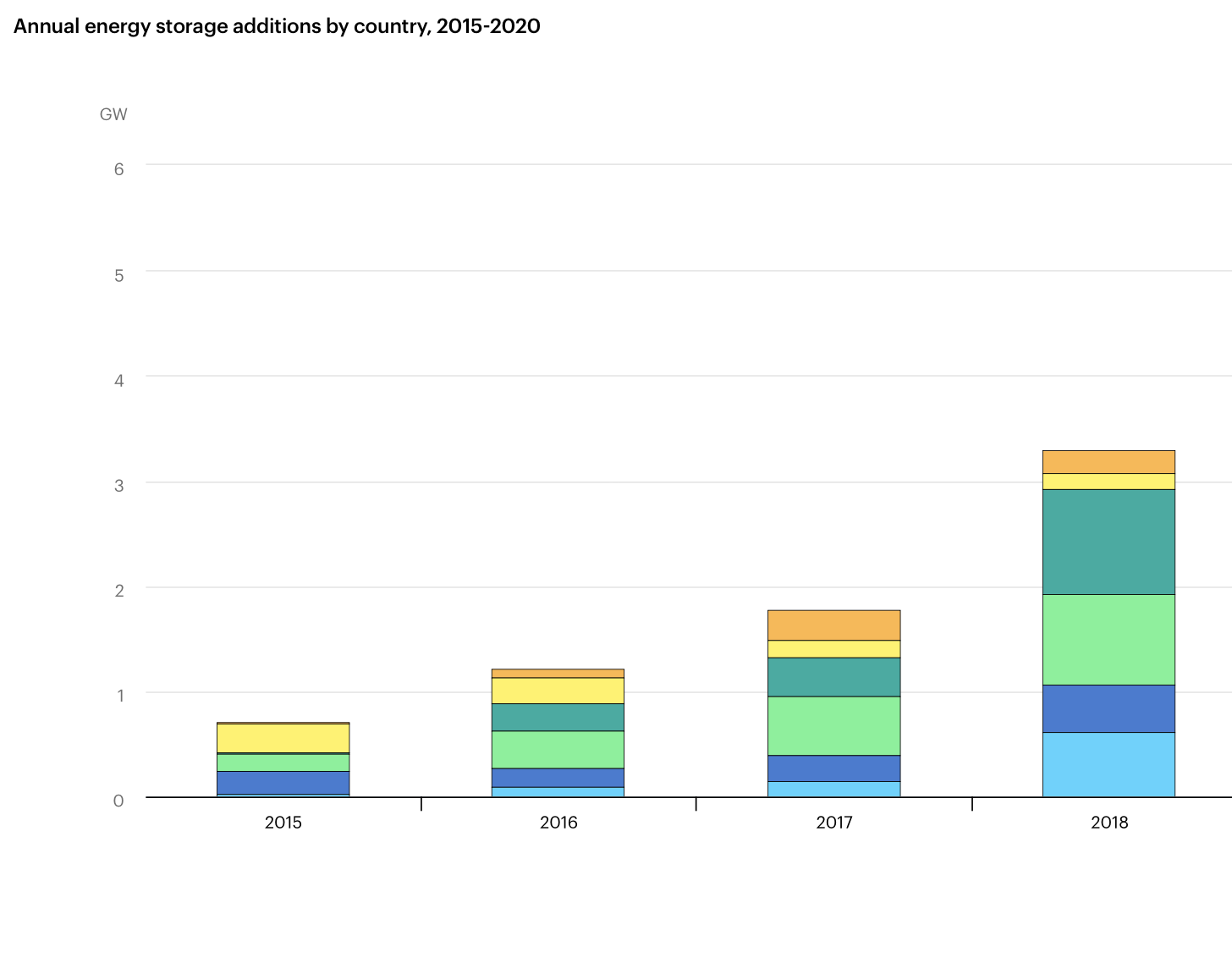
Considering other technologies, the most popular technology in electrical systems are lithium-ion batteries, which, according to the Environmental and Energy Study Institute, as at 2019 had 90% of the market for power grid energy storage. Battery storage capacity additions in 2020 rose to a record-high 5 GW, up 50% after a mediocre 2019, when installations failed to rise for the first time in a decade. China and the United States each registered gigawatt-scale additions. Utility-scale installations continue to dominate the market, accounting for around two-thirds of total added capacity.
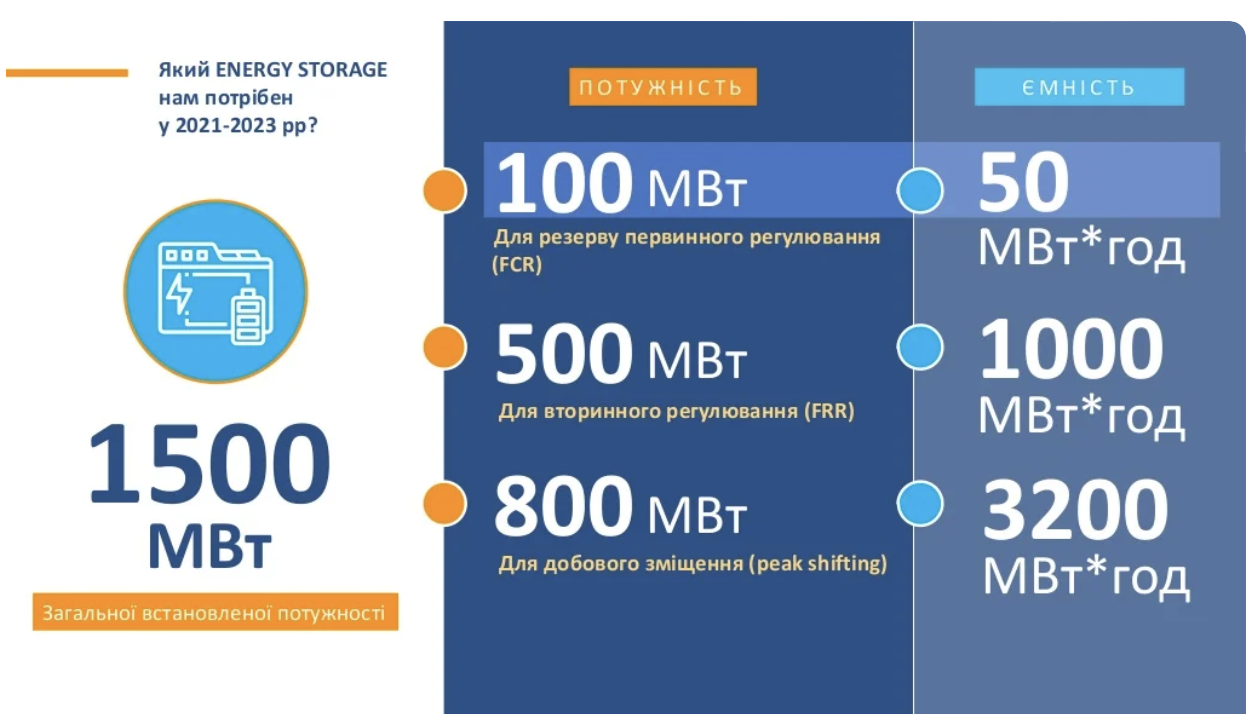
According to statements made by representatives of National Power Company Ukrenergo Pr.JSC, Ukraine’s demand for battery-based energy storage during the period of 2021-2023 is estimated to be at the level of 1500 MW. In the opinion of Ukrenergo and RTE, the French operator of the transmission system, which is a party to the signed memorandum, the demand of the Ukrainian system for battery-based energy storages is already within the range of 220 MW/h – 264 MW/h. It should be pointed out that at the current stage, such a level of energy storage is not available in the Ukrainian energy system.