

Energy storage potential
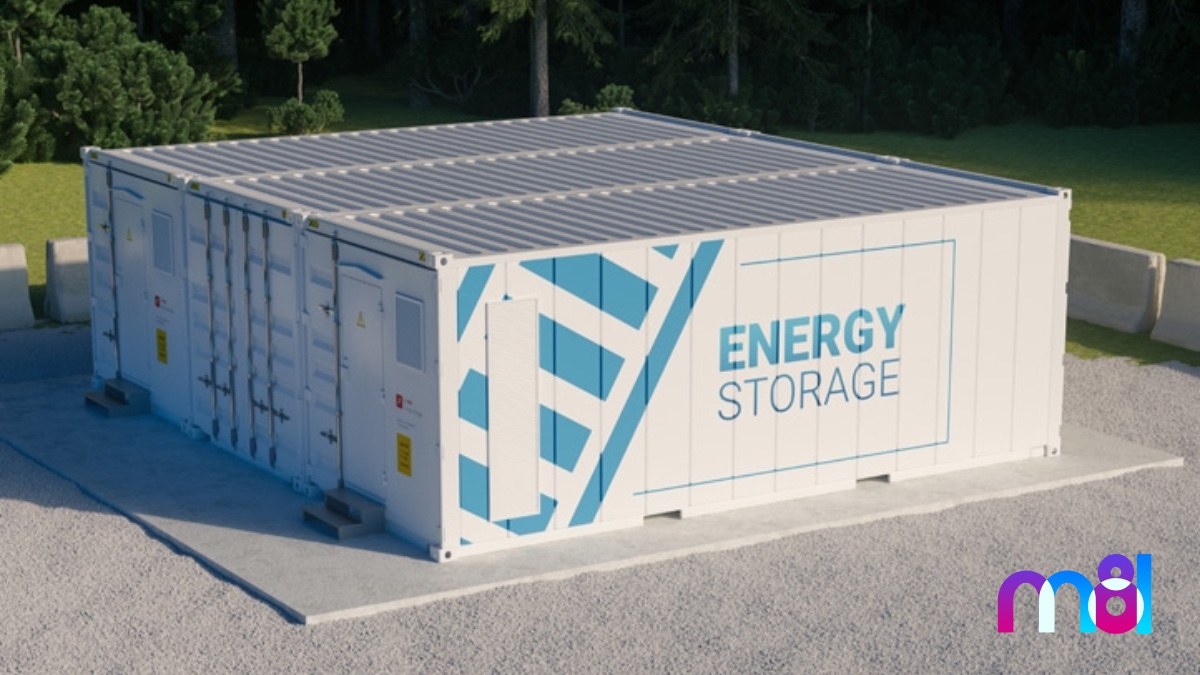
As solar and wind make up larger portions of the energy mix, energy storage is becoming an increasingly important piece of the puzzle in keeping electricity networks running smoothly. And as battery costs fall, new business models are emerging to increase the value of battery energy storage projects for both grid operators and project owners.
To keep solar and wind installations rolling toward the ambitious 2030 targets in place in many regions, large amounts of energy storage will be needed to help balance the intermittent nature of these generation technologies. Consequently, grid operators and energy regulators are beginning to consider more closely how batteries can fit into the wider energy landscape and open up new business models and potential revenue streams, both to encourage further installations and to maximize the value that can be gained from them.
The majority of large-scale batteries developed to date rely on frequency response as a grid service for their primary revenue – charging or discharging over short intervals to keep grid frequency within acceptable operational limits. The bankable revenues from the provision of grid services, paid to the storage unit for its availability to meet frequency regulation needs, allowed early large-scale battery projects to achieve financial close.
While large-scale battery developments to provide grid services are encouraging, as solar and wind grid penetration continues to increase, there is a growing need to time-shift energy generated by renewables to cover more of the day, something batteries are well placed to do.
The United Kingdom has been among Europe’s leading markets for battery storage. As an island with weaker interconnections than much of continental Europe, the U.K. saw a greater need for the frequency regulation services offered by batteries than some neighboring countries and is showing signs of extracting more services from them. It was also an earlier mover in deregulating its grid services market – making it available to battery project developers and owners.
Recently, renewables developer Penso Power connected the largest battery seen in Europe to date to the U.K.’s grid – the 100 MW Minety battery project located in southern England. The battery will initially operate into the national grid operator’s “dynamic containment” service for frequency regulation but expects to participate in other markets as well. Shell subsidiary Limejump has worked on optimizing the battery via software to serve these varying functions.
“Batteries can compete in a multitude of markets in the U.K. including ancillary markets, wholesale power markets and the ‘balancing mechanism’,” explains Genna Boyle, head of renewables and flexibility at Limejump. “Initially, the Minety battery has been optimized into National Grid’s new ‘dynamic containment’ product. Limejump has also set the battery up as a balancing mechanism unit should extreme prompt market volatility arise, and it has secured a ‘capacity market’ contract, benefiting from guaranteed payments every month.”
Limejump says that the dynamic deal under which the Minety battery will operate, providing revenue certainty for owner Penso Power, has already encouraged further investment in the U.K.’s large-scale storage sector, and that it is speaking to a number of developers about future projects.
“We expect to see a trend towards larger storage projects following the relaxing of storage planning requirements and the increasing need for batteries to maintain security of supply as we transition towards net zero,” adds Boyle. “Investors are likely to fall into two camps: those requiring a floor price and those willing to take on some merchant risk for better returns.”
In the most optimistic scenario of its latest Future Energy Scenarios report, U.K. utility National Grid says it will need 18 GW of energy storage by 2030, which it expects to break down as 12 GW of batteries, 4 GW pumped hydro and 2 GW of vehicle to grid.
“In principle, storage should be able to provide grid services and store power from CfD generators, providing the metering arrangements can distinguish between the two,” the report states.
Further consideration of these arrangements by energy regulators like the U.K.’s BEIS could bring together the currently quite separate revenue streams for solar and storage assets, and this could create space for much more energy storage, both standalone and co-located with renewables, in the U.K. and across Europe. “Frequency regulation and other markets that the storage industry has lent on for growth are quite shallow,” says Hilton. “But this is much deeper, and likely to drive a second wave of growth across Europe.”